

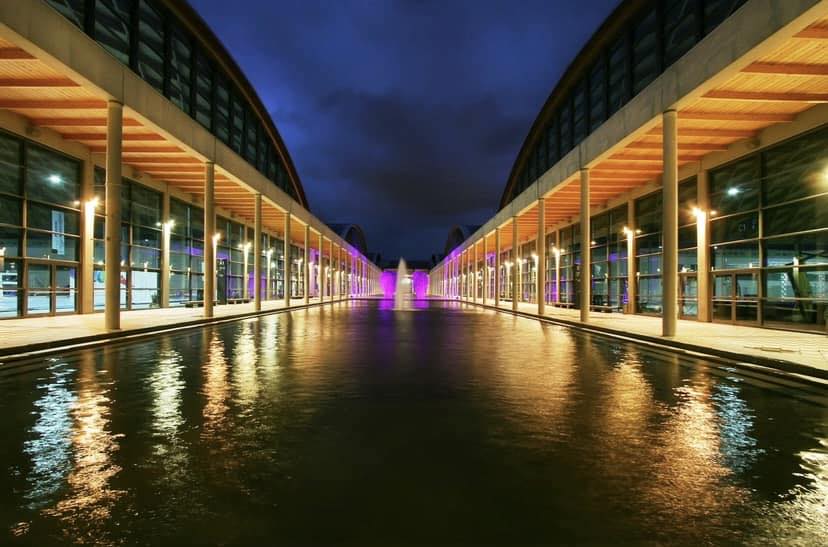

A walk through Borgo San Giuliano and its murals is definitely something to put on the list of must-do experiences in Rimini. The Borgo is one of the most authentic places in the city and a must-see for anyone wondering what to do in Rimini beyond the beaches. The atmosphere is full of poetry—every wall tells a story, every corner hides a work of art. It’s an open-air museum that blends art, memory, and local identity.
Founded around the year 1000, it was originally the fishermen’s quarter. Today, its houses are beautifully restored. It’s also the perfect place to savor the traditional flavors of Romagna cuisine—or enjoy a romantic candlelit dinner. In recent years, the Borgo has become a popular evening meeting spot, thanks to the redevelopment of the Marecchia river basin, the picturesque Piazza sull’Acqua, and the pedestrian walkway connecting the two banks.
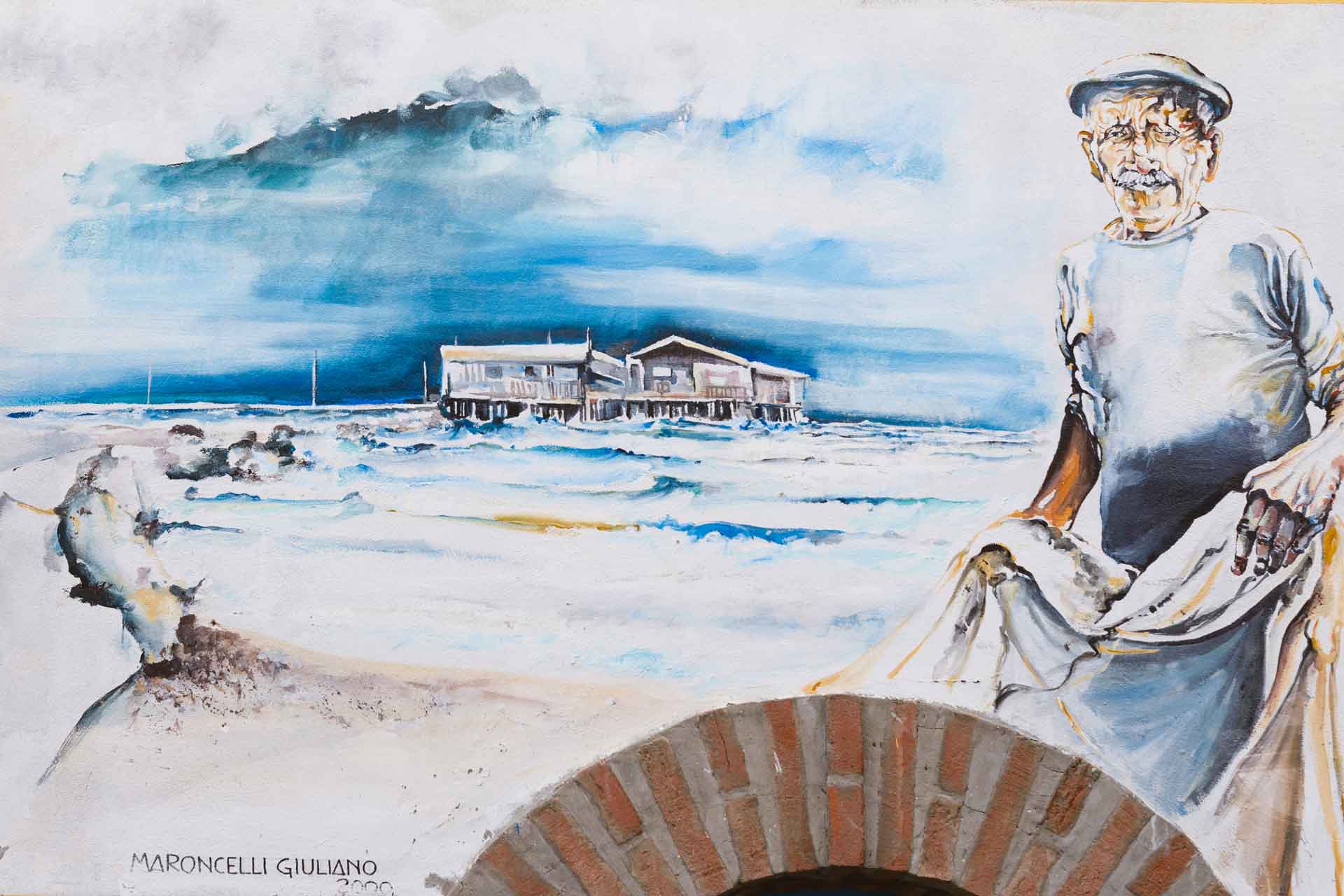
Murals like “The Fisherman and the Palata” by Giuliano Maroncelli
The Birth of the Murals: A Cultural Act of Resistance
The tradition of murals that made Borgo San Giuliano famous has deep roots. In 1979, the city council proposed demolishing the neighborhood to make way for a new residential area. In response, the locals organized the first “Festa de’ Borg” to celebrate and defend their identity.
Several Rimini-based artists were invited to paint the most iconic local figures on the walls of the houses. During the second edition of the festival, the first murals were created, depicting daily life, trades, and local traditions.
This tradition has continued, and today the murals tell the story of the Borgo from the 1900s to the present day.
Murals Dedicated to Fellini
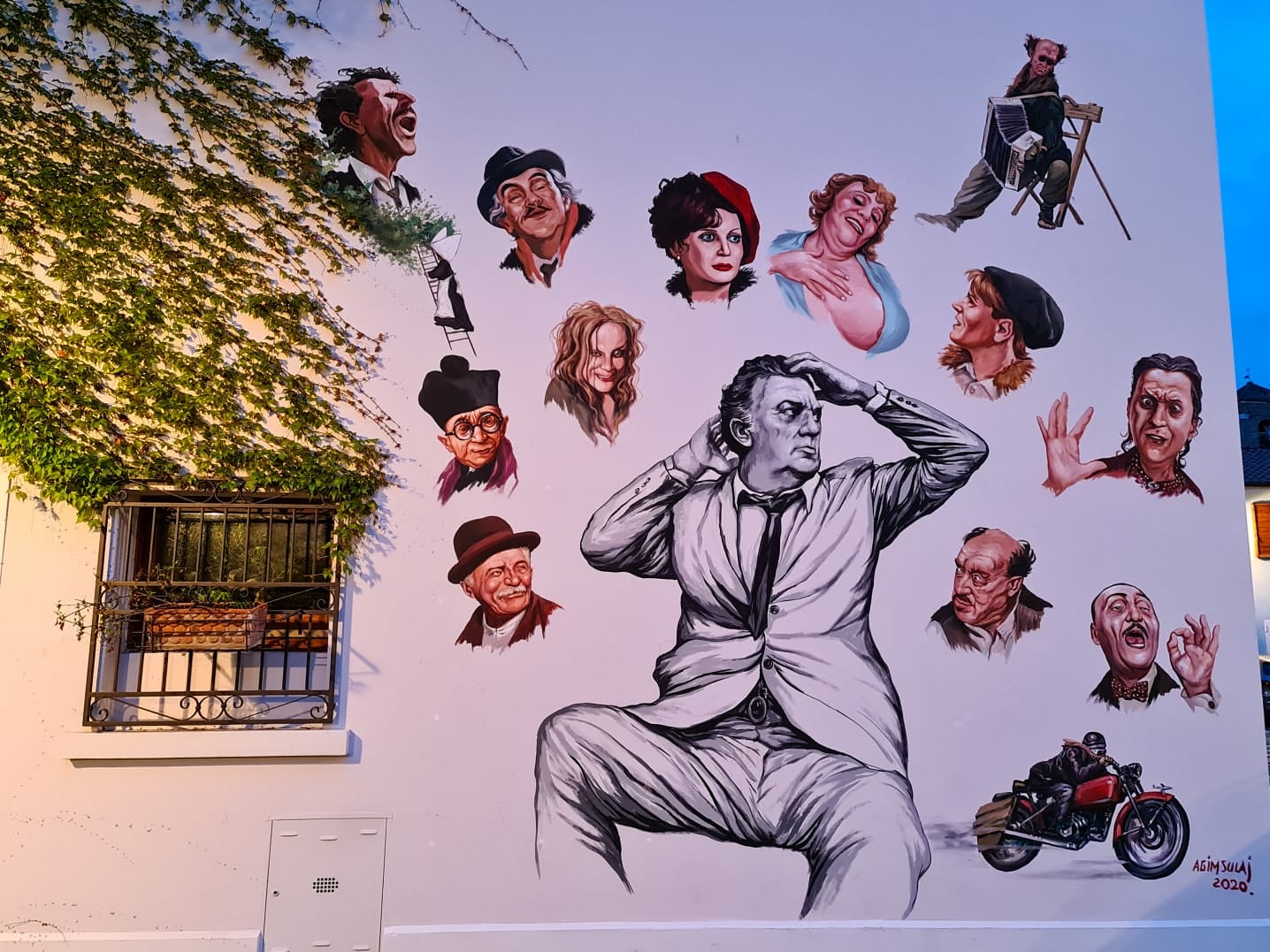
In 1994, the festival was dedicated to Federico Fellini, who had passed away that same year. The Maestro had featured many colorful local characters in his films. Several artists painted murals inspired by his works, becoming a lasting tribute to the legendary director. Not far from the Borgo, you’ll also find the Fellini Museum and the historic Cinema Fulgor.
The Festa de’ Borg Celebrates Rimini’s Popular Traditions
To keep the spirit of the Borgo alive, the Società de’ Borg was established, organizing the renowned Festa de’ Borg. This event brings the charm of old Rimini to life. Small squares turn into stages filled with street performances, music, and traditional food throughout the neighborhood’s alleys.
The first murals were painted on the oldest houses—some have been lost, while others can still be seen or found in vintage photos. During the 2020 edition of the Festa de’ Borg, new murals were added. Among them, Agim Sulaj dedicated an entire wall to Fellini, surrounded by his unforgettable characters. Another standout piece is the “Felliniesque grandfather emerging from the mist,” reinterpreted by artist Kiril Cholakov. Another artist who has enriched the Borgo with murals is Mauro Dallonda, a regular contributor to the festival, invited back to recreate some of his early works now lost.
The Borgo Map: An Itinerary of Art and Memory
In 2025, the Società de’ Borg created the first official map of the Borgo—an itinerary exploring the murals and the artists behind them. You reach the Borgo by crossing the ancient Tiberius Bridge, a symbol of Roman Rimini. Once across, the scenery changes: from the wide, bustling streets of the city center, you enter a maze of intimate lanes decorated with murals that narrate the past and present of this unique quarter.
What to Do in Rimini? Follow the Artists of Borgo San Giuliano
The first mural you’ll see is Soul of the Wall by Eron, one of Italy’s most important urban artists, known for blending street art with social themes. This piece portrays Ida Marzi, one of the first women involved in the Pci Primo Maggio Club, founded in the ruins of the Decio Raggi School in the 1940s.
On Via Marecchia and Via Padella are some of the most iconic works by Maurizio Minarini, a Rimini painter involved in the Festa since the early 1980s. Among his murals are The Tiberius Bridge under the great snowstorm of ’29 and The beach with a circus tent rising into the sky—a poetic and symbolic tribute that merges real and cinematic Rimini. His warm colors and dreamlike figures convey Fellini’s childhood memories and artistic inspirations.
In a quieter, yet deeply evocative corner, you’ll find Scureza – Amarcord (2005) by Teresio Troll, a multifaceted artist—painter, actor, poet, and musician. This mural celebrates the legendary Scureza ad Corpolò, a mythical local figure reimagined through the lens of Amarcord. It blends theater and painting with irony and affection, in the unmistakable tone of the author.
Piazzetta Pozzetto and Via Padella at the Heart of the Borgo
Walking along Via Pozzetto, you’ll come across the works of Foglietta, an artist from Urbino who captured simple scenes of Borgo life: Friends in the Garden, At the Beach, By the Fireplace—portraits of shared humanity and daily life, celebrating the beauty of ordinary gestures and community spirit. His soft tones and gentle figures lend the walls a sense of intimacy, as if the buildings were breathing with those who stop to admire them.
Moving on toward Piazzetta Pozzetto, you’ll find The Rooster and the Peacock (2014) by Ericailcane, an internationally acclaimed street artist known for his whimsical and visionary style. The two animals represent symbolic contrasts, and as often in his work, behind the delicate imagery lies a powerful message about balance, conflict, and social dynamics.
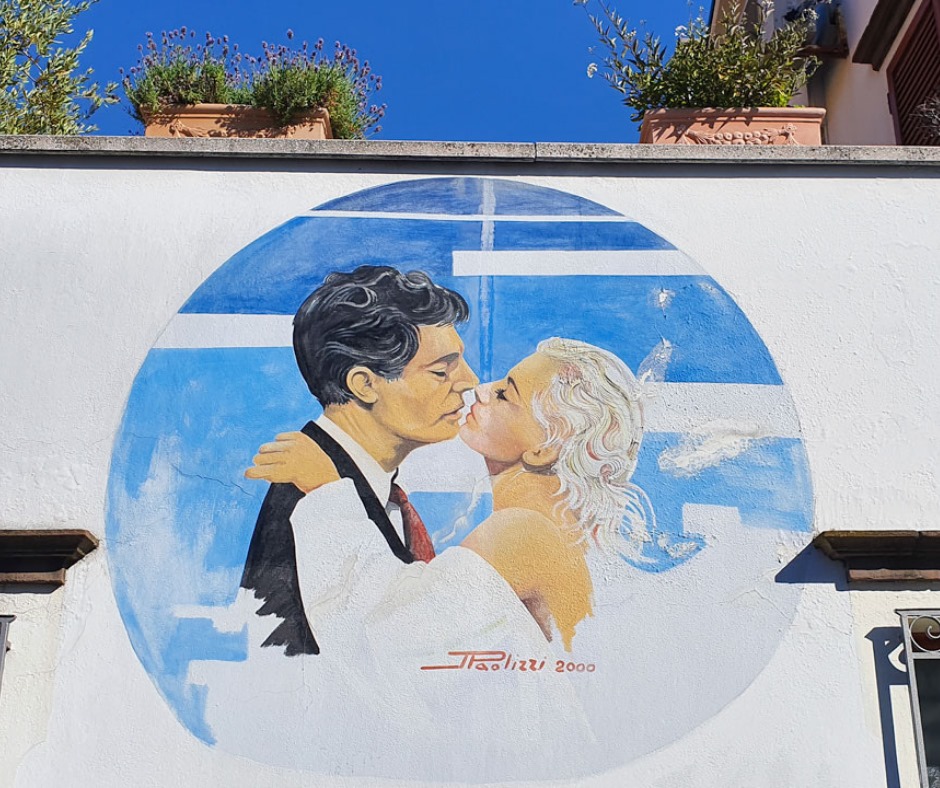
A few steps away, between the street and Piazzetta Padella, are works by Agim Sulaj, an Albanian painter who settled in Rimini in the 1990s. His style combines figurative precision with symbolic depth. In Migrant and The Migrant’s Suitcase, he explores themes of displacement with great sensitivity. Objects, suitcases, and silent faces tell stories of journeys, separations, and new beginnings. In the same square is Mastroianni and Anita Ekberg – La Dolce Vita by Italo Paolizzi.
… And in Piazzetta Santa Caterina
Just a bit further, in Piazzetta Santa Caterina, you’ll find The Grandfather in the Fog by Kiril Cholakov. The technique is unique: the figure is formed by words written continuously in pencil, creating a refined play of light and shadow. This mural was a community project, with residents contributing their thoughts and memories, making the piece deeply rooted in local life.
On Via Forzieri, you’ll find works by Giuma (Giuliano Maroncelli), a local artist and the Borgo’s historical memory. His murals tenderly depict scenes of everyday life—The Palata and the Sailor, Palata and the Chestnut Seller. Giuma also created the commemorative tiles dedicated to fishermen and carriage drivers (fiaccheristi) of the Borgo—small ceramic plaques mounted on the homes they once lived in. Each one features names, nicknames, and evocative watercolors. These are small yet powerful ways of preserving the history of the community.
“E Mur de Suranom” – The Wall of Nicknames, Inspired by Tonino Guerra
At the end of the walk, you can’t miss E mur de suranom—the Wall of Nicknames—an idea by Tonino Guerra for the 1994 edition of the Festa dedicated to Fellini.
In 2009, the Società del Borgo documented all the sailors and fishermen who lived in the neighborhood from the 1950s onward. In 2017, the list was expanded to include the fiaccherai, or carriage drivers. Ceramic tiles were placed next to the doors of the homes, bearing the nicknames of historic residents. A heartfelt tribute that makes each house an integral part of Rimini’s urban memory.
Even these small fragments tell precious stories of the Borgo’s life.
Still Wondering What to Do in Rimini?
This walk through its painted streets is an unforgettable way to discover the city’s hidden soul.
Take a few hours—perhaps in the late afternoon when the light makes the colors glow—and lose yourself in the stories that accompany you with every step.
Special thanks to La Società de’ Borg